
Abstract
This poster explores the early descriptions of obsessive-compulsive disorder (OCD) in a historical text, by Abu Zayd al-Balkhi, a polymath from the 9th century CE. Al-Balkhi’s work provides one of the earliest systematic accounts of OCD-like symptoms, distinguishing his observations from those of earlier figures like Galen. Analysis of his main treatise has been conducted with use of the modern classification ICD-11, aimed to underscore the evolution of the conceptualisation and terminology of OCD over time. The findings indicate a more nuanced understanding in relation to aetiology, presentation, vulnerability factors and their relationships. This study hopes to emphasise the importance of historical perspectives in enriching our understanding of psychiatric disorders.
Introduction
Abu Zayd Al-Balkhi (850-934) was a notable polymath from ninth-century Persia & most famous for his contributions to the field of medicine. Only recently rediscovered and translated into the English language in 2013, Al-Balkhi’s book ‘Sustenance for Bodies and Soul’ is arguably his most revered text of modern times. This book lays down ground-breaking concepts &Balkhi may have been the first to pioneer the complex interaction between one’s mental and physical health – “If the psyche gets sick, the body may also find no joy in life with development of physical illness” [1] – an idea which Western psychologists only began to explorea millennia later. This poster sets out to explore how OCD symptoms were historically described in a ninth century manuscript, in comparison to a modern-day classification of symptomatology as described in ICD-11. Further, this work explores how Al-Balkhi integrated a multifacetedsocial, psychological, and physical treatment plan for OCD.
Methodology
The English translation of the manuscript ‘Sustenance for Bodies and Soul’ was initially studied by two researchers via the triangulation method, before the reading was verified by a third. A reading of the book took place in three stages. Firstly, to identify key words (including obsessions, sadness, mood, depression, anxiety, compulsions, fear, anger and isolation). Secondly to explore the usage of these core psychological terms and their definitions. Lastly, to compare & contrast the conceptualisation of OCD from Al-Bakhi’s historical manuscripts findings against a modern classification approach, ICD-11. This allowed the development of central themes (grouped under aetiology, symptomology & therapeutic techniques).
Al-Balkhi’s Theory
Al-Balkhi’s theory centres on anxiety as the root cause of mental health disorders. Whilst he identified obsessional behaviours as stemming from both psychological and physical factors, he also suggested that OCD has a strong heritable component. He recognised that obsessive thoughts negatively impacted on physical health and that sufferers might experience altered thinking, referred to today as cognitive distortions, such as catastrophic thinking—a central therapeutic component in cognitive-behavioural therapy (CBT). Al-Balkhi’s OCD treatment includes methods he suggested for other disorders, like the ‘exposure therapy’ he recommended for phobias. He also noted the aggravation of symptoms through isolation and inactivity, highlighting social and behavioural strategies to mitigate symptoms, which again, resonates with modern therapeutic recommendations. The results of our analysis are summarised in two infographics, the first comparing Al-Balkhi’s work to ICD-11’s core features, and the second to its ‘additional features’.
Results: Comparison of OCD in ICD-11 and Balkhi’s ‘Sustenance of the Soul’
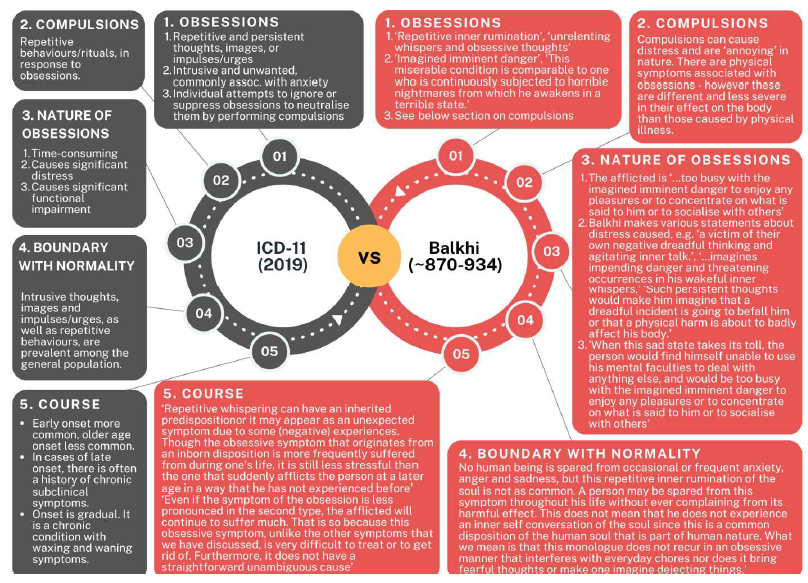
Figure 1. Infographic comparison of OCD in ICD-11 and Balkhi’s ‘Sustenance of the Soul’.
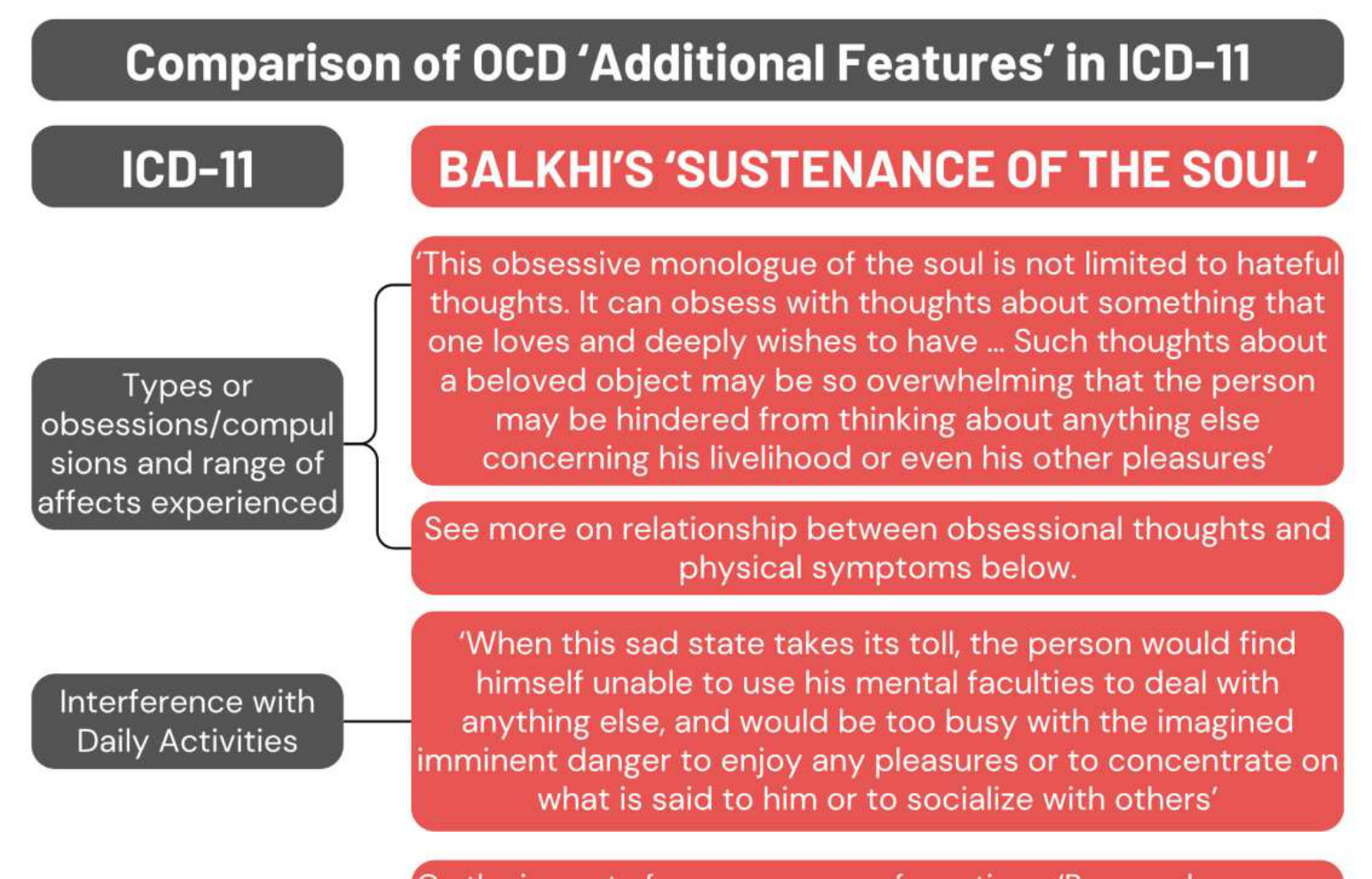
Figure 2. Infographic comparison of OCD in ICD-11’s ‘Additional Features’ and Balkhi’s ‘Sustenance of the Soul’.
Discussion
For OCD, Al-Balkhi gives a multifaceted treatment plan, acknowledging the complex nature of the condition. Management of OCD is divided into three ‘outward’ treatments and seven ‘inward’ treatments, as is delineated below.
Outer Treatments (Tx) – Behavioural Advice
1.Firstly, Al-Balkhi recommends to ‘avoid being alone since loneliness would naturally stimulate
negative thought and harmful self-talk.’ This advice may be less emphasised in contemporary treatment, where the medical model is populated. Recent studies confirm that social engagement can positively impact individuals with OCD. [2]
2.Al-Balkhi advises against idleness, as inactivity fosters internal rumination. Engagement in meaningful work or activities is emphasised by Balkhi; this can distract from obsessive thoughts, a notion supported by modern research, which shows that structured activities improve outcomes for OCD sufferers. [3]
3.Lastly, he encourages seeking counsel from trusted friends or relatives, who can offer support and challenge irrational beliefs. Receiving social support correlates with greater psychological and physical wellbeing. [4]
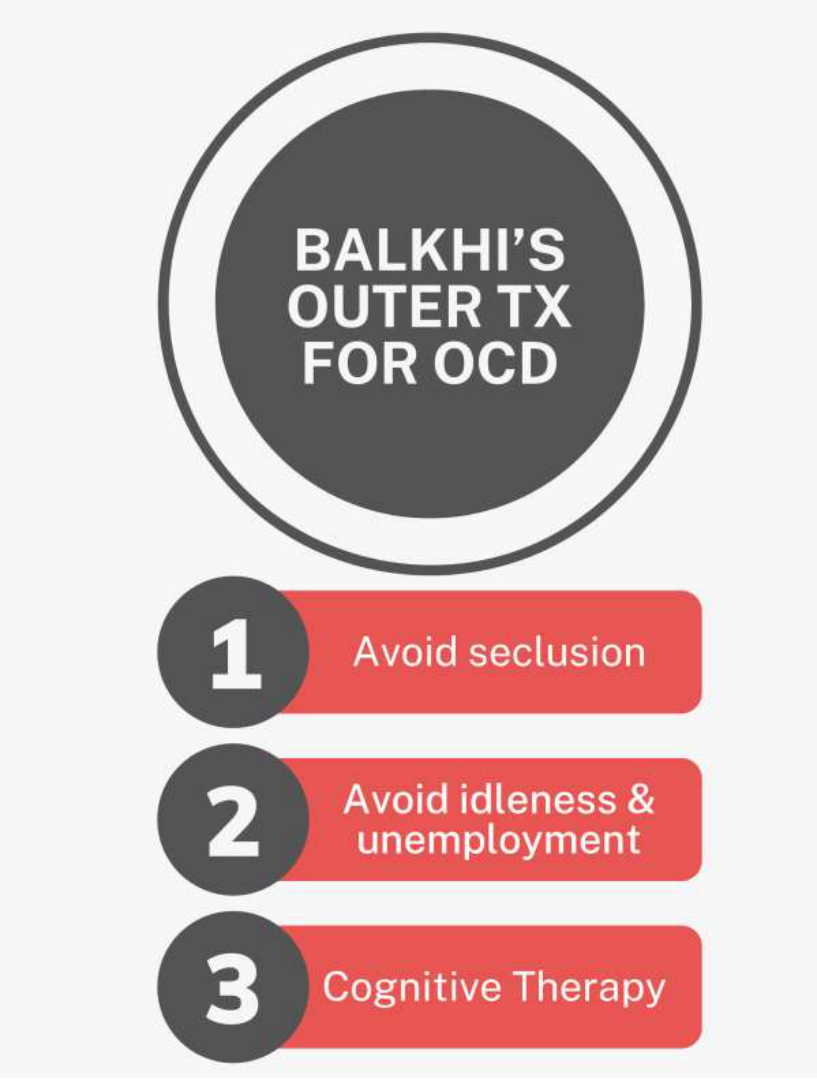
Figure 3. Balkhi’s outer treatments for OCD
Internal Treatments (Tx) – Cognitive and Psychological Therapies
Al-Balkhi categorises internal thoughts into two types: those stored in memory when calm, and those generated during the onset of obsessive symptoms.
1.The first mental technique revolves around challenging catastrophic thoughts by observing how others react to these imagined dangers. If these thoughts had any basis, others would also be alarmed, but since they are not, the sufferer can conclude that these thoughts are unfounded. The techniques mentioned, such as cognitive restructuring and reality testing, have consistently reduced symptoms in trials. [5][6]
2.Al-Balkhi’s secondtechnique focuses on understanding the origin of one’s psychological symptoms. By recognising that these thoughts are part of one’s natural temperament, much like a chronic physical ailment, the sufferer can come to accept and tolerate them. This is similar to modern approaches like covert desensitisation and mindfulness, which encourage acceptance of distressing thoughts without judgement.
3.In his third treatment, Al-Balkhi uses metaphors about natural laws to explain causality and refute the idea that life can end without an external or internal cause. This addresses cognitive distortions common in OCD sufferers and aligns with modern CBT techniques that focus on understanding causality and challenging distorted thinking.
4.Al-Balkhi’s later techniques further reinforce the importance of cognitive restructuring and mind-body connections. He highlights the value of the therapeutic alliance, which has been shown to be associated with positive outcomes in psychotherapeutic treatment, [7] a key aspect of supportive psychotherapy and holistic treatment models.
5.The treatise focuses on positive visualisation and gratitude practice aligns, which aligns with modern therapeutic techniques shown to reduce OCD symptoms significantly. [8]
6.Finally, Al-Balkhi integrates the predominant belief systems of his time, such as religious-based teachings on healing, into his treatment plan, demonstrating a holistic approach and wider understanding of his readership. He also emphasises the importance of trust in the medical profession, acknowledging that a positive patient-doctor relationship can greatly enhance treatment outcomes, as has been well documented in recent studies, where the strength of this relationship has been said to be directly correlated with functional outcomes, and also correlates with an improved quality of life for patients. [9]
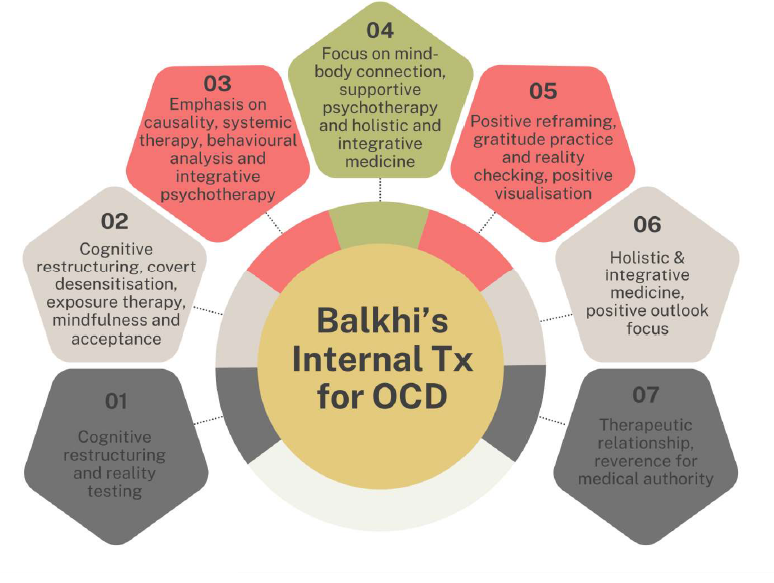
Figure 4. Balkhi’s internal treatments for OCD.
Conclusion
This study highlights how a modern understanding of OCD has been described in a historical 9th century text. This brings value to exploring other historical texts and developing an understanding of how new insights can be incorporated in clinical practice.
References
- Al-Balkhi, Abu Zayd. Sustenance of the Soul. International Institute of Islamic Thought, p. 13.
- Hertenstein, E., Rose, N., Voderholzer, U., Heidenreich, T., Nissen, C., Thiel, N., Herbst, N., &Külz, A. K. (2012). Mindfulness-based cognitive therapy in obsessive-compulsive disorder – a qualitative study on patients’ experiences. BMC Psychiatry, 12, 185. https://doi.org/10.1186/1471-244X-12-185
- Albert, U., Maina, G., Ravizza, L., &Bogetto, F. (2004). Work and social adjustment among patients with obsessive-compulsive disorder. Journal of Clinical Psychiatry, 65(8), 1006-1013.
- Uchino, B. N., Bowen, K., Carlisle, M., & Birmingham, W. (2012). Psychological pathways linking social support to health outcomes: A visit with the ‘ghosts’ of research past, present, and future. Social Science & Medicine, 74(7), 949-957.
- Whittal, M. L., Woody, S. R., McLean, P. D., Rachman, S., &Robichaud, M. (2010). Cognitive treatment of obsessions: A randomized controlled trial. Behaviour Research and Therapy, 48(4), 295-303.
- Foa, E. B., & Kozak, M. J. (1986). Emotional processing of anxiety-provoking stimuli: exposure to corrective information. Psychological Bulletin, 99(1), 20-35. https://doi.org/10.1037/0033-2909.99.1.20
- Horvath, A. O., & Symonds, B. D. (1991). Relation between working alliance and outcome in psychotherapy: a meta-analysis. Journal of Counseling Psychology, 38(2), 139-149. https://doi.org/10.1037/0022-0167.38.2.139
- Hofmann, S. G., & Smits, J. A. J. (2008). Cognitive-behavioural therapy for adult anxiety disorders: A meta-analysis of randomized placebo-controlled trials. Journal of Clinical Psychiatry, 69(4), 621-632.
- Berry, C., Hodgekins, J., Michelson, D., Chapman, L., Chelidoni, O., Crowter, L., Sacadura, C., & Fowler, D. (2022). A systematic review and lived-experience panel analysis of hopefulness in youth depression treatment. Adolescent Research Review, 7, 235-266. https://doi.org/10.1007/s40894-021-00167-0