
Background
Visiting restrictions in intensive care units (ICUs) during the COVID-19 pandemic led to widespread adoption of virtual visiting to maintain contact between critically ill patients, their families, and healthcare professionals.
Qualitative descriptive studies explored experiences of virtual visiting using semi-structured interviews with ICU clinicians and family members at Guy’s and St Thomas’ NHS Foundation Trust.
Data was analysed thematically to identify ethically salient experiences and moral tensions.This presentation reinterprets findings from the previously published study through the lens of ethics and professional identity.
Aim
To examine the moral implications of virtual visiting in ICU and consider how these insights can inform ethically grounded, culturally and faith-sensitive clinical practice beyond the original research setting.
Methods
Clinicians and family members who experienced virtual visiting during pandemic-related restrictions participated in semi-structured interviews. Thematic analysis focused on ethically significant experiences related to decision-making, end-of-life care, relational dynamics, and professional responsibility.
Findings are revisited here as secondary dissemination, emphasising ethical meaning rather than methodological detail.
Results
Four key ethical themes were identified:
| Theme | Title | Description |
| 1 | Presence vs Proximity | Virtual contact was perceived as meaningful yet, insufficient during deterioration or dying. |
| 2 | Relational Autonomy | Physical absence limited family participation in decision-making and increased clinicians’ roles as moral intermediaries. |
| 3 | Moral Distress | Staff described discomfort at being sole physical witnesses to suffering and death. |
| 4 | Justice & Inequality | Shaped by digital literacy, language barriers, and cultural or faith-related needs. |
Table 1. Four key ethical themes identified from thematic analysis of virtual visiting experiences in ICU.
Discussion
These findings suggest that while virtual visiting can preserve communication, it cannot fully replicate the relational and embodied dimensions of care, particularly at the end of life. The absence of families at the bedside altered traditional dynamics of shared decision-making and placed an increased moral burden on clinicians, who often became the only witnesses to patients’ final moments.
The themes also highlight inequities in access and experience, underscoring the importance of culturally and contextually responsive approaches to care. Together, these insights emphasise that ethical ICU practice extends beyond communication to include presence, participation, and dignity.
Practice Implications
Although conducted in a single tertiary ICU, these ethical insights informed subsequent clinical practice in a different critical care setting.During my role as a junior clinical fellow at the Royal London Hospital, rapid community-supported provision of multiple Qur’an audio devices (Qur’an Cubes) was introduced to support spiritual comfort and dignity for Muslim patients particularly when family presence was limited.
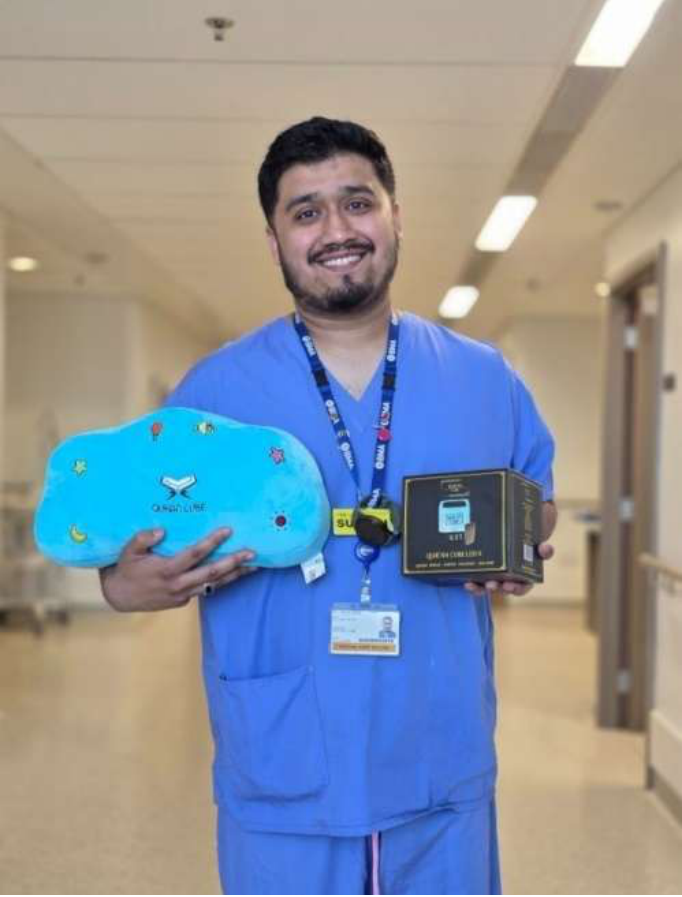
Figure 1. Qur’an Cube audio device used to provide spiritual comfort for patients in critical care. Community-supported initiative funded through charitable donations.
This initiative demonstrates how ethical reflection on research findings can translate directly into faith-sensitive, dignified bedside care, bridging the gap between clinical necessity and spiritual needs.
Conclusion
Virtual visiting may support communication but cannot replace embodied family presence.
Ethical ICU care requires recognising families as moral participants and integrating culturally and spiritually responsive practices beyond pandemic contexts.
References
- Clarke K, Borges K, Hatab S, Richardson L, Taylor J, Evans R, et al. Ethical considerations related to virtual visiting for families and critically ill patients in intensive care: a qualitative descriptive study. BMC Med Ethics. 2024;25(1):126. doi:10.1186/s12910-024-01130-z.
- Xyrichis A, Pattison N, Ramsay P, Saha S, Cook A, Metaxa V, Meyer J, Rose L. Virtual visiting in intensive care during the COVID-19 pandemic: a qualitative descriptive study with ICU clinicians and non-ICU family team liaison members. BMJ Open. 2022;12(4):e055679. doi:10.1136/bmjopen-2021-055679.